On the issues of the State Educational Institution “Tajikistan University of Innovation and Digital Technologies
Build your future with us.
New methods of studying modern sciences
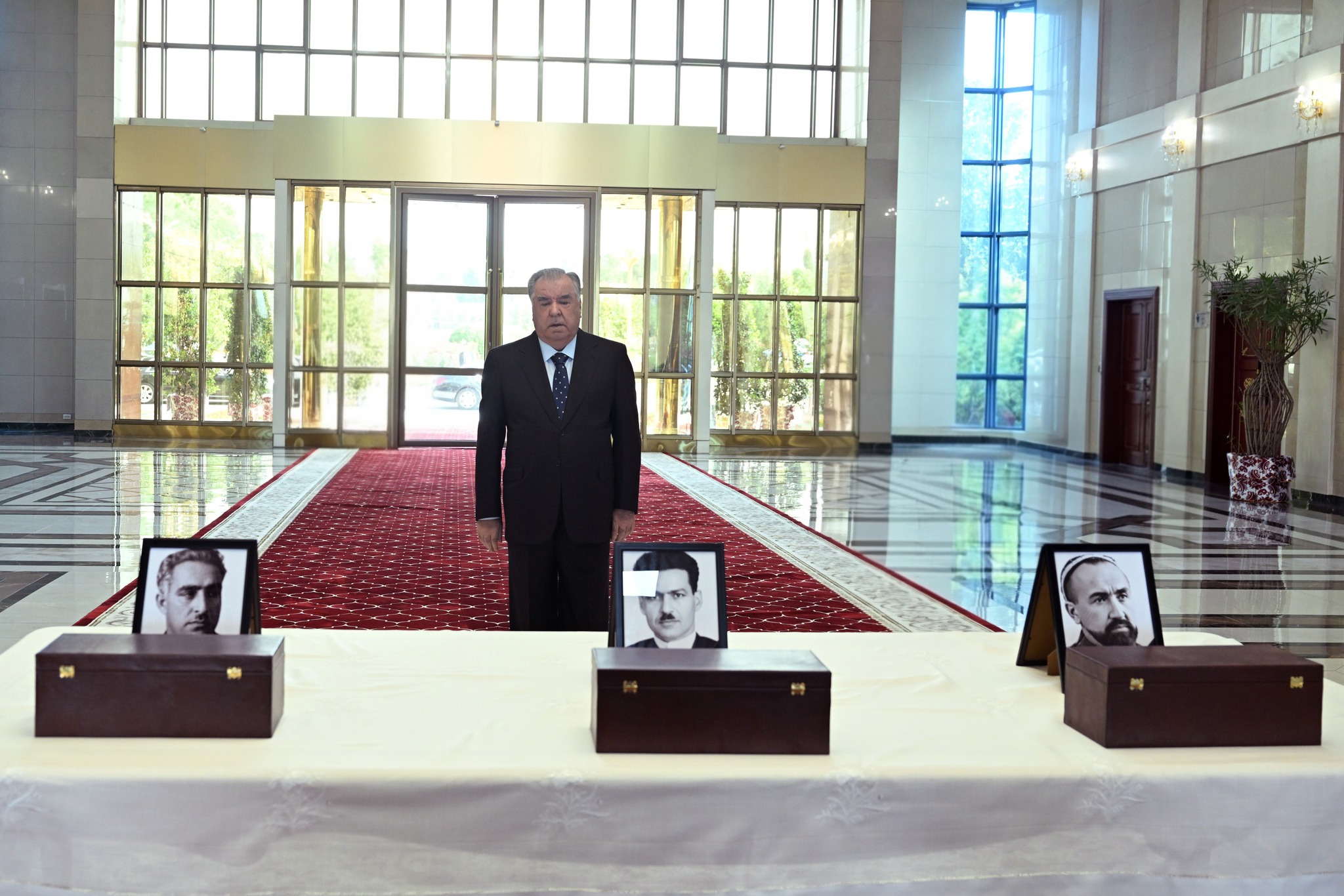
As previously reported, today, through the unique and historic initiative of the President of the Republic of Tajikistan and Leader of the Nation, Эмомалӣ Раҳмон, part of the soil from the burial sites of prominent historical figures and devoted sons of the nation — Нусратулло Махсум, Шириншо Шоҳтемур, and Нисор Муҳаммад — was brought from Moscow to Dushanbe.
The funeral and reburial ceremony was held at the Luchob Cemetery with full respect for Islamic traditions and with special honors.
Below is a brief overview of the lives and achievements of these heroic and selfless personalities who made remarkable contributions to the history of the Tajik nation.
Нусратулло Махсум (Nusratullo Lutfulloyev) was born in 1881 in the village of Chashmai Qozi in the Garm Valley, now Rasht District, into a peasant family.
He received his primary education in a traditional school and madrasa and from an early age helped his family with agricultural work. Due to economic hardship, he later became a labor migrant, where he gained broad experience and a wider worldview.
From 1920 onward, he became involved in party and state affairs and actively participated in establishing the new government in Eastern Bukhara.
Following the establishment of the Tajik Autonomous Soviet Socialist Republic in November 1924, he was elected Chairman of the Revolutionary Committee of Tajikistan, becoming the country’s first leader.
In 1929, after the formation of the Tajik SSR, he was elected Chairman of the Central Executive Committee of Tajikistan and one of the co-chairmen of the Central Executive Committee of the Soviet Union.
During Stalin’s political purges, he was arrested in July 1937 on fabricated charges and sentenced to death in October of the same year for allegedly “preparing counterrevolutionary crimes.”
In 1957, the Military Collegium of the Supreme Court of the Soviet Union overturned the sentence due to lack of criminal evidence.
During the years of Tajikistan’s independence, by the initiative of Leader of the Nation Эмомалӣ Раҳмон, the historical role of Nusratullo Maksum was reassessed, and he was awarded the title Hero of Tajikistan. Streets and institutions were named after him in recognition of his role as one of the founders of modern Tajik statehood.
Шириншо Шоҳтемур was born in 1899 in the village of Porshnev in Shughnon District of the Gorno-Badakhshan Autonomous Region into a peasant family.
He lost his parents at a young age and, due to poverty, was forced to work from childhood. At the same time, he studied at a boarding school and became fluent in Russian.
From 1914 onward, he left his homeland in pursuit of education and work, expanding his knowledge and worldview.
Beginning in 1921, he became involved in Soviet party and state activities and actively participated in establishing the new government across various regions of Central Asia.
After the formation of the Tajik ASSR, he was appointed a member of the Revolutionary Committee of Tajikistan and sent to Dushanbe to help establish the republic’s party and governmental institutions.
Shirinsho Shotemur was among the most active defenders of the rights of the Tajik people. One of the most notable examples of his political activity was his report addressed to Joseph Stalin regarding the cultural and socio-economic conditions of Tajiks in Central Asia in June 1926.
At the end of 1933, he was elected Chairman of the Central Executive Committee of the Tajik SSR.
On July 9, 1937, he was arrested in Moscow and later sentenced to death on fabricated charges of participating in an anti-Soviet nationalist organization.
In 1956, the Military Collegium of the Supreme Court of the USSR overturned the sentence due to lack of evidence of criminal activity.
After Tajikistan gained independence, his services to the nation were officially recognized, he was awarded the title Hero of Tajikistan, and his name was given to streets, institutions, and monuments.
Нисор Муҳаммад was born in 1897 in Peshawar.
He participated in the revolutionary events in Afghanistan and was one of the heroes of the Third Anglo-Afghan War in 1919. He was also a close associate of Amanullah Khan.
Later, as a political emigrant, he moved to Central Asia and made a major contribution to the development of science and education in Tajikistan.
Through his efforts, the first textbooks and modern schools were established. In 1923–1924, his books “Guide to Arithmetic” and “Alphabet” were published. Under his guidance, the first Tajik students were sent to prestigious universities in Moscow and Leningrad.
After the establishment of the Tajik ASSR, Nisor Muhammad joined state service and in 1927 was appointed People’s Commissar for Education of Tajikistan.
He also played a significant role in integrating the Khujand district into Tajikistan and in transforming Tajikistan into a Union republic.
During Stalin’s political purges, he was arrested on October 8, 1937, sentenced to death on fabricated charges, and executed on October 22 of the same year.
In Dushanbe, one of the streets where the Ministry of Education and Science of the Republic of Tajikistan is located has been named after Nisor Muhammad in recognition of his outstanding contributions.